Barnett Woodson
The Brass VerdictBarnett Woodson is the defendant at the center of a double-murder trial in which a discrepancy about an alleged confession helps undo the prosecution’s case. His acquittal is a decisive legal victory: the account of the trial says he walks out of court, while his defense lawyer privately believes he killed the two men whose deaths had brought him to trial. That gap between what a verdict establishes and what a lawyer believes gives Woodson’s story its uneasy force.
Identity and Background
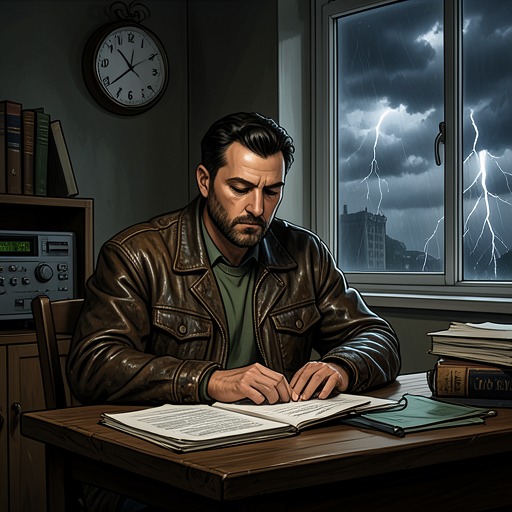
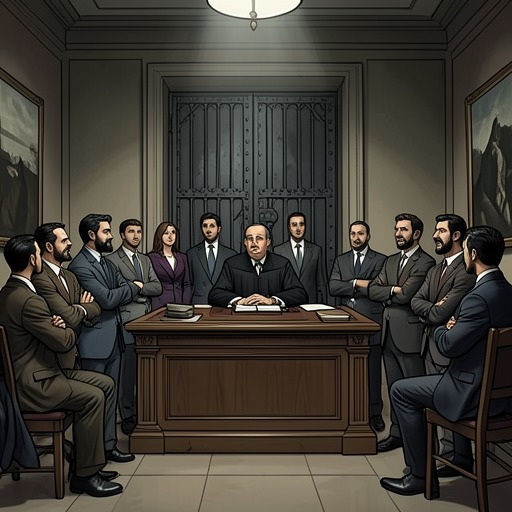
Woodson is tried in Department 109 of the downtown Criminal Courts Building on two murder charges. By the fourth day of trial, as his lawyer recalls it, the case carries the possibility of execution at San Quentin. The recollection presents him first through the stakes of the proceedings: he is a defendant facing the state’s most severe punishment, dependent on whether the prosecution can prove its account to a jury.
The narrative offers little biographical information about Woodson apart from his position in the case and the lawyer’s assessment of him. It does, however, distinguish the murders for which he is on trial from the killings mentioned in a witness’s account of an alleged confession. That distinction becomes central: the testimony purports to connect Woodson to two deaths, but the identities of the people described do not match the victims in the pending case.
The Alleged Confession and the Trial
A witness tells the court that Woodson had spoken to him about killing two men and disposing of their bodies. The account is specific enough to sound like an admission, but its apparent force is undermined when the defense contrasts the men described in the story with the two white victims Woodson is charged with killing. The mismatch raises a fundamental question about what the witness’s testimony actually proves: even if the conversation happened as described, it does not amount to a confession to the murders being tried.
Woodson’s lawyer later characterizes the testimony as a lie that became the means of opening the case up. The important turn is not a new account that establishes who killed the charged victims, but a weakness in the prosecution’s use of the witness’s story. The defense exposes the difference between an alleged confession to one pair of killings and the charges concerning another pair. In a trial where the defendant risks execution, that distinction changes the practical stakes of the evidence.
The lawyer recalls watching Woodson being taken through a steel door to the courtroom holding cells after the proceedings. He says he had never directly asked Woodson about the killings, but believed that he had killed the two Westside boys. He also makes clear that this belief was not the measure of his professional task. His responsibility was to test the state’s case with the best of his ability. In that account, the defense does not depend on the lawyer declaring Woodson innocent; it depends on the prosecution failing to establish guilt through a sound case.
Defense, Verdict, and Consequences
The later recollection of the case identifies its outcome plainly: Woodson is acquitted of the double murder and leaves the courtroom. The acquittal ends the immediate threat posed by the charges, and the account describes it as having saved his life. It does not, however, resolve the lawyer’s private judgment about what happened. The verdict settles the legal question before the court; it does not make the lawyer believe that Woodson was uninvolved in the deaths he associates with him.
After leaving court, Woodson sarcastically apologizes to the media for getting away with murder, according to a later account of the trial. The gesture turns the acquittal into a public confrontation: rather than presenting himself as relieved or vindicated, he taunts the authorities and draws attention to the result. The same account says this episode effectively ended Jerry Vincent’s career as a prosecutor. Woodson’s public response therefore extends the consequences beyond the verdict, into the professional history of the lawyer on the opposing side.
Narrative Significance
Woodson’s role is shaped by the tension between a person’s suspected guilt and the limits of the case brought against him. His lawyer’s belief that Woodson killed the Westside boys sits beside the lawyer’s insistence that the state must still prove its charges. The narrative keeps those positions distinct: a defense lawyer can doubt a client’s innocence and still regard testing the prosecution’s evidence as the work the system requires.
The alleged confession supplies the trial’s crucial reversal because its details point away from the particular murders before the jury. Woodson’s acquittal consequently demonstrates the difference between suspicion, testimony, and proof. His exit from the courtroom is a legal ending, but not a moral resolution. The lawyer considers the result a life-saving success while acknowledging that Woodson’s hope of simply leaving the deaths behind is not, in his view, a reliable account of what the acquittal means.